

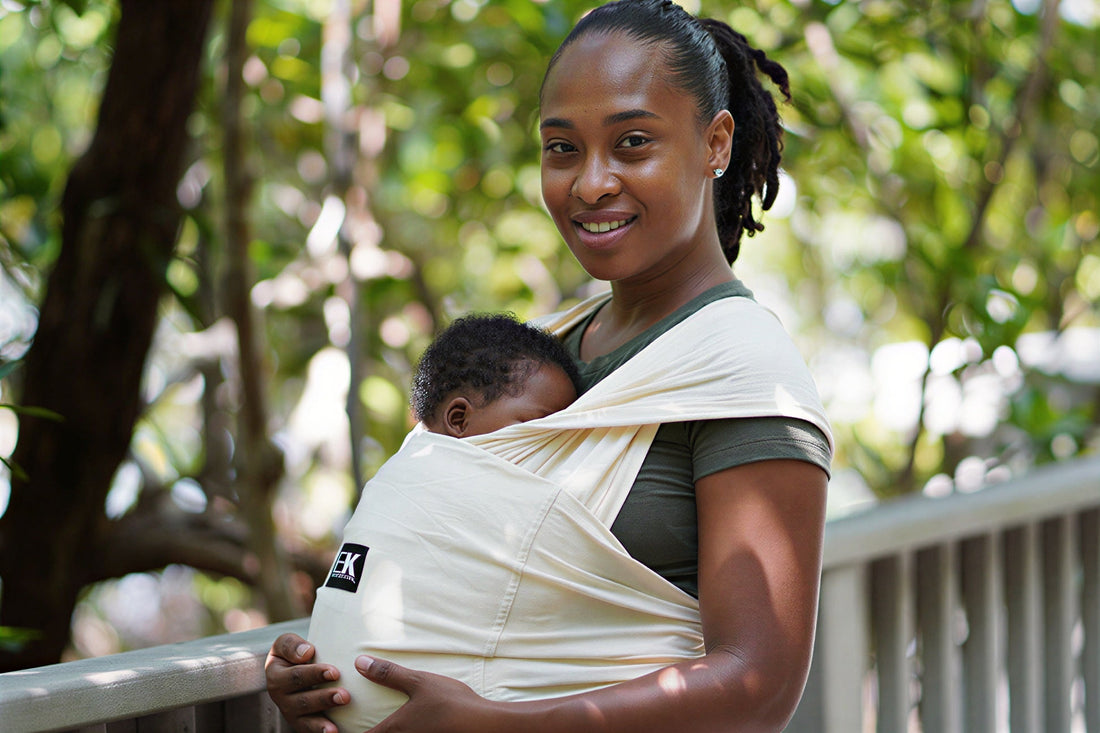
Ergonomic newborn carriers support a baby’s natural posture while keeping them safely positioned against a caregiver’s body. The best newborn carriers distribute weight evenly and support the baby’s hips, spine, and neck. Options like a newborn wrap carrier or newborn baby wrap provide snug support that promotes bonding, comfort, and healthy development during the earliest months.
The first weeks with a newborn often revolve around one simple goal: keeping your baby close while still managing everyday life. Feeding, soothing, and bonding fill your day, but so do laundry and errands. That’s where well-designed newborn carriers make a difference.
An ergonomic newborn wrap carrier lets you hold your baby securely while keeping your hands free. The right newborn baby wrap supports your baby’s delicate spine, hips, and neck while creating a calm, comforting environment.
In this guide, you’ll learn what makes newborn carriers ergonomic, how to choose the best option, and how to use them safely and comfortably.
Table of contents
Step-by-step guide to using a newborn wrap carrier
Benefits of ergonomic newborn carriers
Data and research on babywearing
Recommended newborn carrier products
Keep your baby close from day one with Baby K’tan
Step-by-step guide to using a newborn wrap carrier
Using a newborn wrap carrier may seem complicated at first, especially for parents who are new to babywearing. The good news is that wrap-style carriers become much easier with practice. Follow these simple steps to safely and comfortably position your baby in ergonomic carriers.
1. Position the wrap correctly
Begin by wrapping it around your torso before picking up your baby. The center of the wrap should rest across your chest or stomach, depending on the wrap design.
Spread the fabric evenly across your shoulders and back so the weight distributes comfortably. One of the main advantages of these wraps is how the fabric molds to your body. When positioned correctly, the wrap provides a wide, supportive base that helps reduce strain on your shoulders and back.
Take a moment to smooth out any twists in the fabric. A flat, evenly spread wrap provides better support for you and your baby.
2. Secure the fabric panels
Next, cross the fabric panels over your chest. Pull the wrap snugly around your body so it feels secure without restricting your breathing.
A properly adjusted newborn wrap carrier should feel similar to a supportive hug. If the wrap feels too loose, your baby may sink too low. If it feels too tight, you may feel uncomfortable after prolonged wear.
Many parents find that tightening the fabric gradually helps achieve the right balance. The goal is a firm, supportive fit that still allows natural movement.
Once you cross the panels, tuck or secure the ends as specified by the wrap design. Most newborn carriers include clear instructions to guide this step.

3. Place your baby inside the wrap
After securing the wrap, gently lift your baby and position them against your chest. In a properly fitted newborn wrap carrier, your baby should sit high enough that you can easily kiss the top of their head. This height allows you to monitor your baby’s breathing and comfort at all times.
Carefully slide your baby into the wrap's crossed panels, ensuring the fabric supports their body from shoulder to knee. Many parents notice that babies settle quickly once they feel the warmth and gentle pressure of the wrap.
4. Adjust the baby’s position
Once your baby sits in the wrap, check their posture. We design ergonomic newborn carriers to support the natural “M-position,” which we recommend for healthy hip development.
In this position, the baby’s knees sit slightly higher than their bottom, their legs spread naturally around the caregiver’s torso, and the fabric supports them from knee to knee.
A well-fitted newborn wrap carrier allows your baby’s spine to maintain its natural curve. The wrap should support their body without forcing them into a rigid position.
Take a moment to adjust the fabric panels if needed, gently. Even small adjustments can make a big difference in comfort.
5. Test comfort and stability
Before moving, take a moment to test the wrap's fit. Walk around the room and pay attention to how the newborn wrap carrier feels.
A properly fitted wrap should feel stable and balanced. Your baby should remain snug against your chest without shifting or sagging.
If you feel pressure points in your shoulders or back, you may need to redistribute the fabric to relieve the pressure. One advantage of wrap designs is their ease of adjustment for better support.
Once everything feels comfortable, you’re ready to move through your day with your baby safely and securely positioned.
Benefits of ergonomic newborn carriers
-
Supports healthy hip development: Properly designed carriers maintain the natural hip position recommended by pediatric experts.
-
Promotes bonding and emotional security: A newborn baby wrap keeps your baby close enough to hear your heartbeat and voice.
-
Improves comfort for caregivers: A well-fitted newborn wrap carrier distributes weight evenly, reducing pressure on the shoulders and back.
-
Encourages calm and better sleep: Babies often nap more easily due to gentle movement and warmth.
-
Allows hands-free mobility: Parents can complete everyday tasks while still keeping their newborn secure.
-
Adapts to growing babies: Many ergonomic carriers adjust as babies grow, extending their usefulness beyond the newborn stage.
Common mistakes to avoid
Even the best newborn carriers require proper use to remain safe and comfortable.
-
Using a carrier that lacks hip support: Some carriers hold babies in positions that place stress on developing hips.
-
Wearing the baby too low: In a proper newborn wrap carrier, the baby sits high enough for easy visibility.
-
Covering the baby’s face: A newborn baby wrap should never block airflow or visibility.
-
Wrapping too loosely: Loose fabric reduces stability and support.
-
Ignoring posture and adjustments: Caregivers should periodically check the fit of their newborn carriers to maintain ergonomic positioning.
Data and research on babywearing
Research continues to highlight the benefits of babywearing and ergonomic carriers.
Key babywearing insights
-
Studies suggest babies carried regularly cry up to 40–50% less during the day.
-
Properly designed newborn carriers help support healthy hip alignment in early development.
-
Skin-to-skin closeness promotes emotional bonding.
-
Pediatric specialists emphasize ergonomic positioning for long-term spinal health.
-
Babywearing supports parental responsiveness and infant regulation.
These findings reinforce the value of choosing supportive newborn carriers designed with ergonomics in mind.

Recommended newborn carrier products
When choosing a newborn carrier, focus on comfort, adjustability, and proper ergonomic support.
-
Soft newborn baby wraps: Fabric wraps offer the most customizable fit and are especially popular during the early months.
-
Hybrid newborn wrap carriers: These combine the softness of a wrap with easier, pre-structured designs.
-
Lightweight breathable wraps: A breathable newborn baby wrap helps regulate temperature while maintaining comfort.
-
Adjustable ergonomic carriers: Many modern carriers adjust to accommodate babies as they grow.
Parents often prefer wrap-style carriers because they provide the closest, most flexible fit for newborns.
FAQ
What is the best type of carrier for newborns?
Many parents choose newborn wrap carriers because they offer flexible support and keep babies snug against the caregiver. A soft newborn baby wrap molds to the baby’s body while maintaining proper ergonomic positioning.
Are newborn carriers safe for infants?
Yes, newborn carriers are safe when used correctly. The baby should sit upright with clear airflow, proper hip support, and a visible face. Following manufacturer instructions and checking positioning ensures safe babywearing.
How long can a baby stay in a newborn baby wrap?
Babies can stay in a newborn baby wrap for extended periods as long as they remain comfortable and properly positioned. Caregivers should check frequently for airflow, posture, and temperature to maintain safety.
At what age can a newborn wrap carrier be used?
Most newborn wrap carriers support babies from birth. The soft fabric supports a newborn’s developing body while allowing caregivers to maintain close contact and easily monitor the baby.
Keep your baby close from day one with Baby K’tan
The early months with your baby move quickly, and the right carrier makes those moments even more meaningful. Ergonomic carriers give your baby the support they need while keeping them close enough to feel your warmth, heartbeat, and voice throughout the day.
Baby K’tan designs every newborn wrap carrier and newborn baby wrap with comfort, simplicity, and connection in mind. Soft fabrics, ergonomic support, and easy slip-on designs make it easier to carry your newborn safely while staying hands-free for everyday life.
If you’re looking for a carrier that supports you and your baby from the very beginning, explore Baby K’tan’s collection of ergonomic newborn carriers. Find the wrap that fits your routine, keeps your baby comfortable, and helps you stay connected through every cuddle, walk, and quiet moment together.